

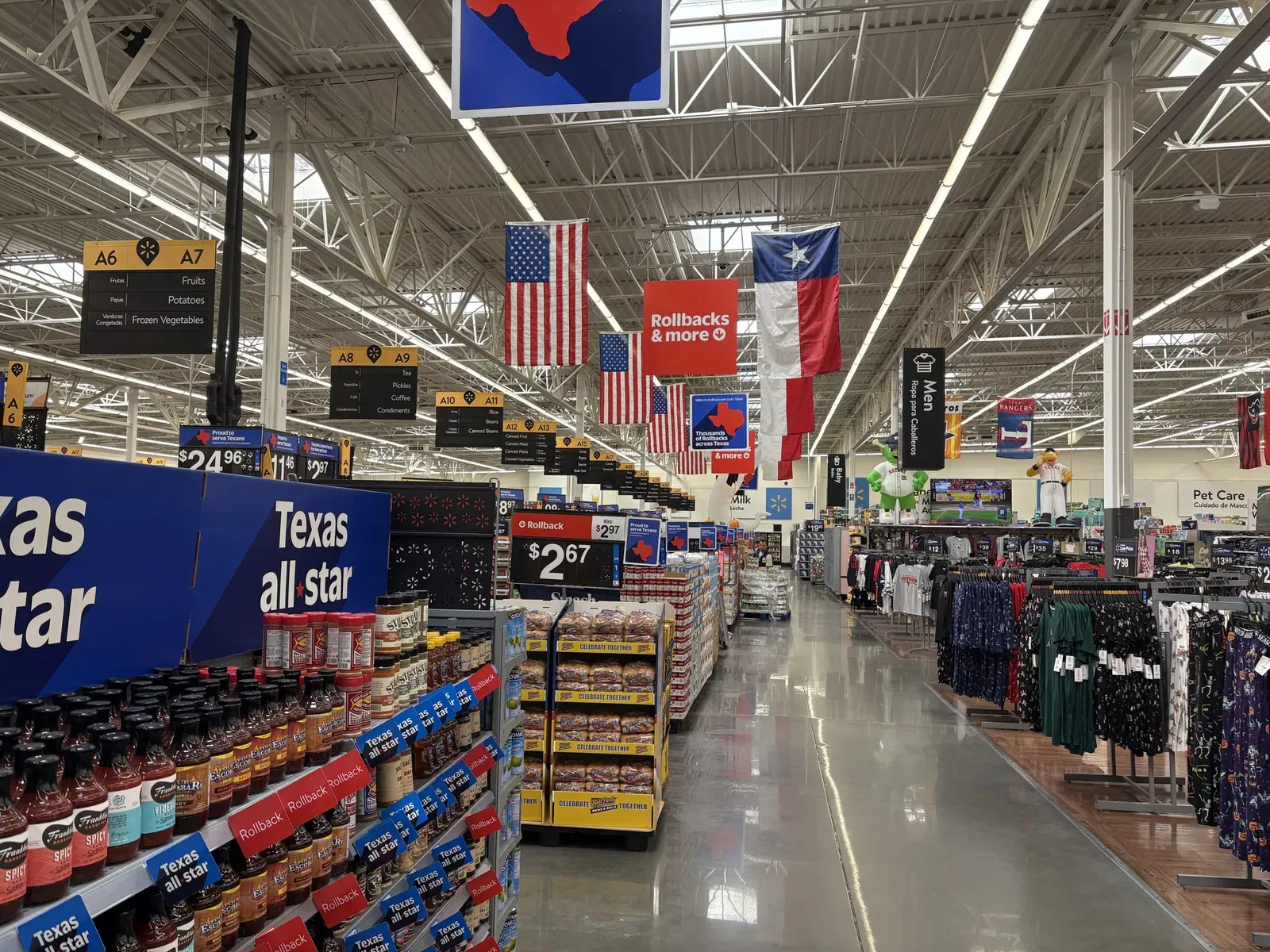
Selling in America may seem like one big market, but in practice, it often feels like 50 different countries in one. Texas is not Florida, and certainly not California or New York. Anyone looking to introduce a retail product into the U.S. must go beyond just “translating some marketing” and launching an American webshop.
Why "the American market" does not exist
America is vast, diverse, and above all: extremely competitive. Consumers are accustomed to an abundance of choices, aggressive deals, and a constant stream of marketing messages. You are competing not only with local players but also with global brands, private labels, and marketplaces like Amazon.
A few fundamentals:
Regional differences are significant: climate, lifestyle, politics, religion, income, and migration backgrounds vary by state and even by city.
Retail is hyper-local: the shopping street, the mall, and the type of neighborhood determine what works and what doesn’t.
Online and offline are fully intertwined: customers search online, compare prices, read reviews, and purchase where it is most convenient at the moment – whether that’s at a Walmart, Lidl, or via Amazon.
Therefore, consider “the U.S.” not as one market, but as a portfolio of regions where you make different choices: where do you start, with what positioning, and through which channels?
Texas vs. Florida: same state, different reality
Imagine: you are selling a retail product, such as a premium kitchen accessory, an innovative cleaning product, or a health & beauty item. On paper, the target audience in Texas and Florida is the “American consumer,” but the context is very different.
Demographics and Lifestyle
Texas
Growing population, strong urban hubs (Houston, Dallas, Austin, San Antonio).
Large Latino community, relatively young, many families, strong “business-and-tech” culture in cities like Austin.
More emphasis on “bigger is better”, value-for-money, and practical benefits.
Florida
Strong seasonal dynamics due to tourism and “snowbirds” (retirees who winter here).
Diverse population: tourists, expats, retirees, Latino community, cruise tourism, Disney visitors.
Greater focus on lifestyle, convenience, vacation vibe, sun/sea/experience.
For your marketing, this means:
In Texas, you can serve multiple personas with one product: young professionals in Austin, families in Houston/Dallas, blue-collar workers in smaller towns.
In Florida, segmentation along tourism, seasons, and age is nearly essential: what you sell in Orlando (families and tourists) is different from what you sell in a retiree community on the west coast.
Climate and Usage Situation
Climate may seem trivial, but it determines how, when, and why people buy your product.
Texas: extremely hot in the summer, significant differences between urban environments and suburbs, more “drive-in” behavior, lots of car usage.
Florida: tropical/humid, hurricane season, lots of outdoor and water sports, focus on protection (sun, moisture, mold, storms).
A cleaning product can be positioned in Florida as “protects against mold and moisture in a humid climate,” while in Texas, the focus is on “quick, powerful, and suitable for busy families.”
Marketing Message and Tone of Voice
In both states, direct, clear American marketing works, but the emphasis differs:
Texas
Emphasis on: strength, performance, value, “family,” and sometimes a hint of local pride (“Made for Texas homes”).
Works well: before-and-after, hard claims (within X minutes, 2x stronger), social proof with real users.
Florida
Emphasis on: ease, comfort, lifestyle, carefree living, protection of home/health in a humid climate.
Works well: visuals with sun, light, and “happy lifestyle,” testimonials from families and retirees, emphasizing “no hassle.”
As a European, it’s easy to make the mistake: you translate your NL USPs into English and use them everywhere. In America, you should think more in terms of local campaigns, even if you sell the same product.
Local Retail: From Mom-and-Pop to Big Box
In the US, physical retail still plays a significant role. Yes, e-commerce continues to grow, but the shopping experience remains crucial – especially in categories like food, household, personal care, and non-food retail.
Key formats:
Grocery-anchored shopping centers: small to medium strip malls, often with a supermarket as an anchor (Publix, Kroger, H-E-B, Aldi, Lidl, Walmart Neighborhood Market).
Big box retailers: Walmart, Target, Costco, Sam’s Club, Home Depot, Lowe’s – massive volumes, huge buying power, but also high expectations.
Specialty retail: chains focused on specific categories (beauty, pets, DIY, electronics, outdoor).
Outlet malls and lifestyle centers: heavily focused on experience, tourism, and deals.
In Florida, for example, you see many Publix-anchored centers and malls catering to tourism and seasonal peaks. In Texas, you find large strip malls and power centers with Walmart, H-E-B, or Kroger as the draw and smaller shops surrounding them.
For your product strategy, this means:
You need to know where your product performs best: next to the supermarket, in a DIY environment, in a discount format, or in a premium lifestyle environment.
Your pitch to a buyer varies by retailer: while one focuses on rotation and price, another emphasizes brand experience and differentiation from competitors.

The role of online platforms: Amazon, Walmart, Lidl & co.
Online is not just a sales channel in the US, but also your business card, test lab, and proof that your brand has traction.
Amazon
Amazon is often the first step for foreign brands.
You can start without immediate physical distribution, test your pricing strategy, and gather data on reviews, keywords, and conversion rates.
Success on Amazon is a signal for many retailers: good ratings, consistent branding, and solid fulfillment show that you are ready for the American consumer.
Walmart (online and offline)
Walmart is both a marketplace (Walmart.com) and a massive physical retailer.
A strategy we often see:
Phase 1: sell via Walmart Marketplace to test if there is demand.
Phase 2: discussions with category buyers to secure shelf space in physical stores.
While Amazon is predominantly online, Walmart gives you the chance to create a seamless omnichannel experience: discoverable online, visible in-store.
Lidl and other value retailers
Lidl and Aldi are steadily expanding their footprint in the US, especially on the East Coast and in states like Florida.
These chains often work with private labels and competitively priced brands.
This can be interesting for European producers when:
Private label supplier (volume, but lower margin and less brand building).
Co-branding or limited editions when your brand has a European “edge”.
Why you should view these channels within a single strategy
It is rarely either Amazon, or Walmart, or physical retail. A mature US strategy combines:
Direct-to-consumer (own webshop, possibly via Shopify).
Marketplaces (Amazon, Walmart Marketplace, possibly eBay, Target Plus).
Physical retail (regional chains, national chains, specialty stores).
And that requires a single integrated plan: pricing, branding, logistics, customer service, and returns need to align. Otherwise, consumers will immediately penalize you with poor reviews, low conversion, and complaints.
Marketing fundamentals that apply throughout America
There are also elements that largely correspond across the entire US – and where America is truly different from the Netherlands.
1. Everyone does marketing
Even the smallest “mom-and-pop shop” often has:
A Facebook page.
A Google Business profile.
Email marketing or a simple newsletter.
Participation in local promotions, events, flyers, coupon booklets.
This means: your brand enters a market where consumers are accustomed to a constant flow of offers, coupons, and loyalty programs. So, you need to be immediately recognizable, clear, and convincing.
2. The volume of marketing communications is gigantic
Americans see:
Many more TV commercials, radio spots, and out-of-home ads than we are used to in the Netherlands.
Coupons, promo codes, “BOGO” (buy one get one), loyalty discounts, flash sales everywhere.
Websites, packaging, and shelves filled with claims, reviews, and comparisons.
Therefore, your message must be:
Hyper clear (what is it, for whom, what does it do, why buy now?).
Quickly build trust (social proof, certifications, reviews, partnerships).
Visually strong (packaging and online visuals must engage within seconds).
Success in the US does not start online or in the “American market” in general, but with a thoughtful, region-specific retail strategy: what you sell in Texas needs to be positioned differently than in Florida, and it is that nuance, combined with a smart game through Amazon, Walmart, and Lidl, that determines whether your brand truly gains a foothold.
From product to American brand
Key steps:
- Clear brand story
- Why does your product exist? What problem do you solve?
- What emotion is associated with it? Protection, convenience, status, pleasure, health?
- Translation into American English
- Not just linguistically, but culturally.
- For example: “sustainable and economical” in the US is more likely to become “saves you money and reduces waste” than “sustainable” alone.
- Adjust packaging and claims
- Are your claims compliant with US regulations (e.g., FDA, FTC)?
- Is your packaging “shelf-ready” in large chains? Consider barcode positioning, case packs, palletizing.
- Social proof and testimonials
- American customers highly trust reviews, ratings, and user-generated content.
- Consider:
- Reviews on Amazon and Walmart.
- Testimonials on your website.
- Influencers or micro-influencers in your niche.
Why you need a USA Sales Playbook
Once you serve multiple channels (Amazon, Walmart, physical retail) and regions (e.g., Texas and Florida), you need structure. A USA Sales Playbook is essentially your “bible” for selling in the US. Elements that should be included:- Target groups per region: personas for Texas, Florida, and other core states.
- Proposition per channel: what is your core promise on Amazon, what in the supermarket, what in specialty retail?
- Pricing strategy: how do you prevent price conflicts between online and offline?
- Marketing calendar: integrate major US holidays (Memorial Day, 4th of July, Labor Day, Thanksgiving, Black Friday, etc.) into your promotions.
- Sales scripts and reasoning: how do you pitch to a buyer from a chain store? How do you position yourself compared to competitors?
- Compliance and operations: sales tax, contract types, logistics agreements, return policies, service SLAs.
Texas and Florida in your playbook
Explicitly incorporate the two example states into your plan.
Texas – Growth state with a broad target audience
- Focus on:
- Large urban hubs (Houston, Dallas, Austin) for premium and innovative products.
- Suburbs and smaller cities for value-added products with a focus on families and practical benefits.
- Channels:
- Regional chains + national players (Walmart, Target, H&E, Kroger).
- Strong online presence (Amazon, Walmart Marketplace) targeting Texas.
- Marketing:
- Clear functionality, powerful results, family-approved storytelling.
Florida – Seasonal market with a strong tourism component
- Focus on:
- Regions with high tourism (Miami, Orlando, coastal areas).
- Regions with a high concentration of retirees.
- Channels:
- Supermarkets (Publix, Aldi, Lidl, Walmart), tourist retail (gift shops, resort stores) depending on your product.
- Online targeting with campaigns focused on sun, beach, vacation, and protection (e.g., against sun, moisture, and mold).
- Marketing:
- Convenience, worry-free shopping, safety, and “enjoy life” messages.
By explicitly addressing these differences in your playbook, you avoid generic campaigns that affect everyone to some extent but don’t truly convince anyone.
Omnichannel thinking: a customer journey across channels
An American consumer:
- Sees your product on TikTok or Instagram.
- Searches for it on Amazon to read reviews.
- Sees it later at Walmart or Lidl while grocery shopping.
- Buys where it’s most convenient and cheapest at that moment.
Your strategy should therefore consider the entire customer journey:
- Awareness through social ads, influencers, PR, and content.
- Consideration through strong product pages on Amazon/Walmart, a clear website, and good explanatory videos.
- Purchase through the channel that makes most sense for the customer (online or offline).
- Loyalty through email, retargeting, subscriptions (e.g., “subscribe & save”), and communities.
This is precisely where many European companies fall short: they want to be “on the shelf” at a chain store, but they forget that consumers first conduct digital research.
Practical pitfalls for Dutch entrepreneurs in America
A few things we often see go wrong at Van Holland Group:
Signing exclusive contracts with a distributor too quickly without a clear plan.
No control over pricing between Amazon, own webshop, and retail.
Insufficient attention to reviews and customer service (in the US, service is a core part of your brand).
Underestimating logistical complexity, especially with perishable or fragile products.
Using one generic “US marketing message” without regional nuance.
Many of these issues are difficult to fix afterward. It is easier and cheaper to create a clear strategy and a USA Sales Playbook upfront than to renegotiate contracts and “reposition” your brand later.
How the Van Holland Group can assist you
The team at Van Holland Group works daily with European companies that are serious about entering the American market. We combine our expertise in:
American retail structures and regional differences (such as the contrasts between Texas and Florida).
Sales and marketing strategies for the U.S., including an omnichannel approach.
Legal and tax considerations for doing business in the U.S. (entities, sales tax, contracts).
What we typically do for clients:
Market exploration and selection of initial regions (e.g., starting in Florida, later expanding to Texas and the Midwest).
Developing a U.S. Sales Playbook that concretely outlines your product, target audience, and channel strategy.
Translating your brand and marketing into American English and consumer language.
Assisting in conversations with distributors and retailers (from pitch deck to contract negotiation).
Aligning online channels (Amazon, Walmart Marketplace, own webshop) with physical retail to maintain a clear brand image and pricing strategy.
The first step
Do you want to see your product on American shelves while also establishing a strong online presence on platforms like Amazon, Walmart, and Lidl’s channels? But do you lack the overview and local nuances between states like Texas and Florida? Then let’s talk, with the Van Holland Group.
Together, we will build a clear USA Sales Playbook, align your proposition with the various regions, and help you not just to be “present” in America, but also to sell successfully in a sustainable manner.
We are happy to assist you with personal advice.
- Schedule a TEAMS video call at your convenience
- Contact us by phone at +1 786 2336384
- Or email us at: info@vanhollandgroup.com
