

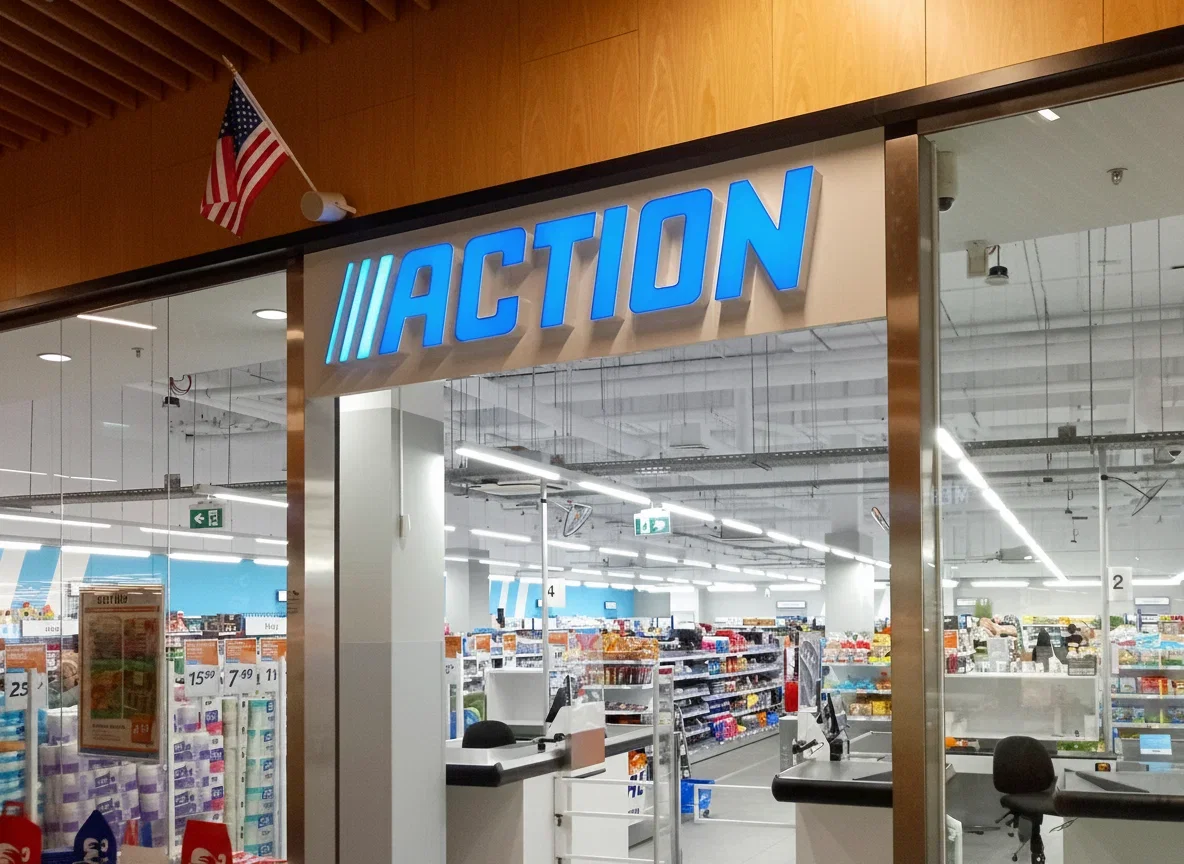
Your key customer announces they are moving into the United States. Great news, but it is also the moment many suppliers start stacking risks without realizing it. New regulations, a different contract culture, different logistics, different liability rules. At the same time, it is a chance to grow alongside them, strengthen your position, and broaden your revenue.
Action is a timely example. According to their press release, Action plans to open its first US store in late 2027 or early 2028, starting in the Southeast (North Carolina, South Carolina, and Georgia) with a target of 100 stores by the end of 2030. For suppliers, this is the right moment to run scenarios and get your “US-ready” plan in place.
A quick reality check: European discounters and the US
Here is a simple overview, just to show how different “US presence” can look per brand:
Discounter
Country of origin
US stores
Sector
Aldi
Germany
2.600+
Grocery
Lidl
Germany
~200
Grocery
Primark
Ireland
N/A
Fashion
Action
The Netherlands
0 (plans for 2027-2028)
Non-food
Why your customer’s US expansion changes your rules of the game
What you can realistically expect as a supplier
1) New requirements for product safety and labeling
- Different safety standards and testing requirements
- Different labeling rules and claim restrictions
- More demand for traceability and documentation
2) Contracts: liability, indemnities, and insurance
- Broad liability clauses
- Indemnity language that shifts risk to the supplier
- Higher insurance requirements
- Recall, chargeback, penalty clauses
Don’t: sign because “this is standard”. In the US, “standard” often means “standard in the retailer’s favor”.
3) Logistics and Incoterms: who carries which risk
- Shipping model and responsibilities
- Incoterms and who is responsible for what
- Import process and who acts as importer of record
Don’t: underestimate hidden costs like detention, demurrage, and port congestion.
4) Price pressure and margin erosion
- Tougher price negotiations
- More pressure on margins
- Higher operational expectations
5) Data, forecasting, and OTIF
- OTIF (On Time In Full) becomes a hard KPI
- Forecasting and supply planning matter more than ever
- “We will fix it when it happens” becomes a liability
Don’t: assume you can absorb a sudden volume jump without stress-testing capacity.
Do’s and don’ts for suppliers who want to grow with their customer
Do’s
- Build a US compliance file per SKU
- Stress-test your supply chain and lead times
- Model your US cost price properly, including hidden logistics costs
- Get contract and liability language reviewed early
- Prepare for OTIF, EDI, and performance reporting
Don’ts
- Wait until the first large purchase orders arrive to “figure it out”
- Assume EU contracts translate to US contracts
- Treat Incoterms as a detail
- Underestimate how fast margin can disappear in discount retail
- Overpromise on delivery reliability during the pilot phase
Action as an example: what their approach means for you
Action is choosing a step-by-step, disciplined rollout with local US retail experts. They are starting intentionally in one region, the Southeast, focusing on North Carolina, South Carolina, and Georgia. That might sound like a detail, but for suppliers it says a lot about what the first phase will look like.In a launch region like this, it is typically a pilot. Not because the retailer doubts the concept, but because they want to test what works in the US chain. Which SKUs truly move, which packaging survives transport and handling, how consumers respond to claims and labeling, and most importantly, which suppliers deliver consistently and as agreed. Chances are Action will work with a tight selection in the early phase. Fewer SKUs, less variation, and a clear preference for partners who have already proven quality and reliability.Expect a fast learning curve. The first shipments are often where the real questions show up. Case packs are not optimal for a US DC, palletization needs to change, labels need adjustments, or lead time is just too long for the desired rotation. Suppliers who can adapt quickly, without turning every change into a multi-month internal project, earn trust.Because Action starts in one region, the supply chain will likely be set up regionally at first, think one or a few distribution centers serving the first stores. That makes lead time and predictability more important than “it can be a week later”. In discount retail, an empty shelf is not a minor issue, it is immediate lost revenue.And then there is scaling. Action is aiming for 100 stores by the end of 2030. In that kind of growth path, the pilot phase is a selection and proof phase. If you perform well in the first years, you can grow with the rollout. If you create too much noise, you often drop off quietly, even if the product itself is fine.If Action brings the European model of “low price, high rotation” to the US, supply chain discipline becomes a key differentiator. Not just delivering cheaply, but delivering predictably, with control over quality, compliance, and logistics. (Source: NOS)
Checklist: 30 Days to Become US-Ready
- Create a list of your top 20 SKUs that are promising for the US market.
- Gather details for each SKU: ingredients/materials, test reports, labels, claims, HS codes.
- Have your contract template and insurance requirements reviewed for US retail.
- Develop a logistics plan with 2 routes (direct import, via 3PL).
- Create a cost model including duties, brokerage, compliance, and returns.
- Define OTIF targets and what you need to achieve them.
Want to sharpen your approach for this opportunity?
If your major client is entering the US market, it’s not just an “additional market.” It’s a new playing field with different risks and a greater reward for suppliers who handle it professionally. Those who prepare now can deliver faster, negotiate better, and scale up with fewer surprises later.
Would you like to discuss your US readiness as a supplier, including strategy, compliance, and supply chain choices? Schedule a conversation.
We are happy to assist you with personalized advice.
- Schedule a TEAMS video call at your convenience
- Contact us by phone (786) 233 6384
- Or email: info@vanhollandgroup.com
FAQ – Frequently Asked Questions
& answers for suppliers
Yes, in many cases it is smart to seriously consider this, even if you do not always need to start with a full US setup right away. A US entity can strengthen your position with retailers and logistics partners, because contracts, liability, and payment flows are often easier to organize with a local structure. It can also help if you want to work with a US 3PL, hold inventory in the US, or scale faster without turning every step into a new legal or operational project.
2) Which compliance topics come up most often in US retail?
That depends on your product, but in practice product safety, labeling, packaging claims, traceability, and test reports come up most often. In the US, proof and audit trails are requested more quickly, also because retailers want to cover their own risks. If you have this in place per SKU upfront, you avoid delays when the first purchase orders come in.
3) What is the biggest difference between contracts in Europe and the US?
The biggest difference is usually liability and risk shifting. US retail contracts often include broad indemnity clauses, higher insurance requirements, and strict rules around recalls, chargebacks, and penalties. It is smart to have contracts checked by someone used to US retail, so you understand what you are accepting and where you can still negotiate.
4) What goes wrong most often in logistics during a first US rollout?
The first issues are rarely about “the product”, they are about execution. Think unclear Incoterms, unexpected port costs, lead times that are too long, or packaging and case packs that do not fit US distribution center handling. The role of importer of record is also sometimes discussed too late, even though it directly impacts responsibilities and costs.
5) How do I prepare for OTIF, EDI, and performance requirements?
Start by mapping your current delivery performance and maximum capacity. Then build a simple plan for forecasting, safety stock, and escalation when delays happen. In practice, OTIF means you deliver not only on time, but also in full and according to the agreed specifications. If your customer requires EDI, it is smart to test early, so you do not run into technical issues at the last minute.
6) Where should I start if I want to become “US-ready” without changing everything immediately?
Start with a short readiness scan across four areas: product and compliance, contract and insurance, logistics and Incoterms, and finance and cost model. Many suppliers quickly discover the real bottleneck, for example missing test reports, unclear importer-of-record arrangements, or a margin that disappears due to hidden logistics costs. A party like Van Holland Group can help as a sparring partner to set the right order and translate it into a practical plan, without launching a full US project right away.
Nuance on timing:
If you are still in an early test phase with limited volumes, exporting from Europe can work fine. But once volumes become structural, your customer demands stricter performance, or your supply chain needs to be closer to the market, a US entity is often a logical next step. The key is not to wait until the first big purchase orders arrive, because then you are already behind.
